Australian Government-backed Cortical Labs hits commercial milestones with world’s first biological computer
Melbourne startup reaches global commercialisation within 12 months of Industry Growth Program support
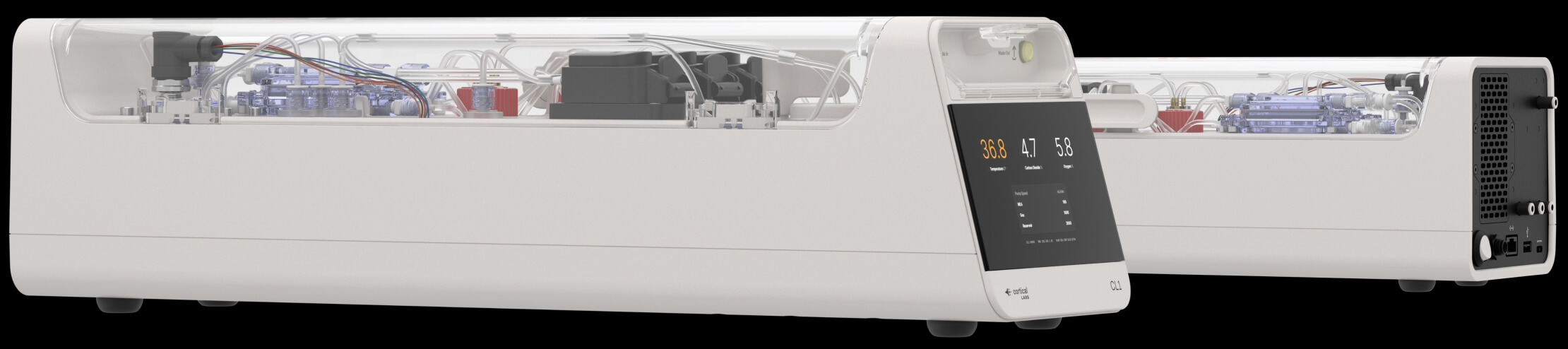
Cortical Labs, a biological computing startup in Melbourne, and creator of the world’s first commercially available biological computer, has reached a series of global commercialisation milestones within six months of receiving support through the Australian Government’s Industry Growth Program (IGP).
Cortical Labs received an AUD $245K Early-Stage Commercialisation grant through the IGP, which was instrumental in bridging the gap between prototype and product. This helped the company prepare its world’s first code-deployable biological computer, CL1, for commercial launch and build Cortical Cloud, the infrastructure for cloud-based access to biological computing.
The CL1 was commercially launched at Mobile World Congress in Barcelona in March 2025, becoming the world’s first code-deployable biological computer. Since receiving IGP support, Cortical Labs has achieved a series of firsts.The Cortical Cloud platform went live to the general public early 2026, making biological computing accessible to researchers and developers globally. In February, 2026 Cortica Labs released the first bespoke public programming API for interacting with biological neural networks. The works supported by the IGP have garnered international attention, evidenced by the company's announcement in March 2026 of a partnership with DayOne, a data centre operator based in Singapore, to construct Singapore's first biological data centre.
Dr Brett J. Kagan, Co-founder and CSO/COO of Cortical Labs, said the IGP had played a critical role in the company’s trajectory from laboratory to global market.
“The Industry Growth Program supported us at exactly the right moment when we had a working prototype but needed to build the commercial infrastructure to make it accessible to the world. The Cortical Cloud, which the IGP helped us commercialise, is now the platform underpinning our global expansion, including our biological data centres in Melbourne. This is what early-stage government support looks like when it’s well-targeted: it accelerates companies that are building genuinely new categories, not incremental improvements.”
The CL1 works by using synthetic biology methods to cultivate living human neural cells from induced stem cells onto a silicon chip, creating a hybrid biological-digital system that learns and adapts with a fraction of the energy and training data required by conventional AI. The technology arrives as global data centre demand intensifies pressure on energy grids and sustainability targets. A rack of 20 CL1 units draws approximately 0.6 kilowatts of power, compared with the multi-megawatt requirements of conventional AI training infrastructure.
As part of the IGP supported project, Cortical Labs also continued to expand its research and commercialisation activities, including optimizing the information processing capabilities of these biological systems, focusing on creating Bioengineered Intelligence (BI) units which aims to train small, highly organised neuron cultures to perform complex information processing tasks. Thanks to the support of the IGP project, the company’s Melbourne biological data centre prototype, housing 120 CL1 units, is now fully operational and attracting users from across the world who are exploring a range of potential applications.